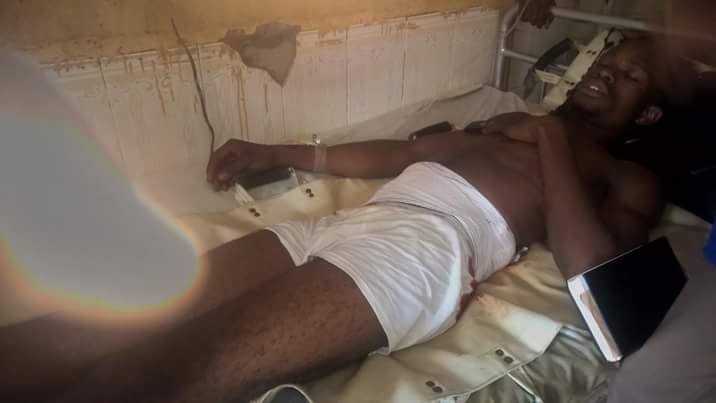
OVER 150 unarmed Biafrans PEOPLE WERE SHOT BY NIGERIA MILLITARY JOINT TASKFORCE RIGHT NOW AT HEADBRIDGE ONITSHA SIMPLY BECAUSE THEY WERE JUBLATING THE RELEASE OF NNAMDI KALU.
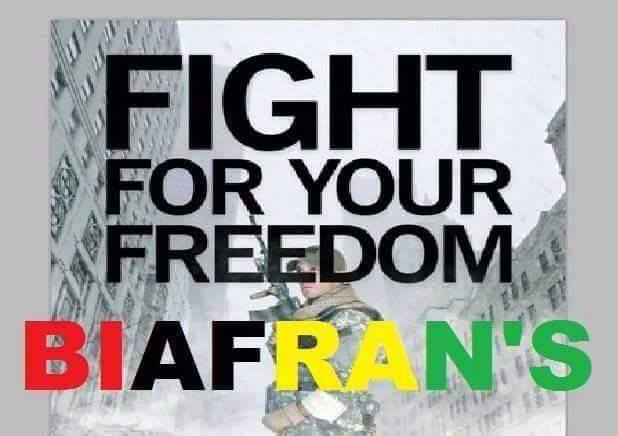
Indigenous People of Biafra(Republic of Biafra) East and Southern people of Nigeria have stand out for self determination.The United Nations charter gives them the right to ask for self-determination. After 3 and half years of Genocide to the people of Biafra by Nigerians in 1969. Indigenous People Of Biafra have stand with one voice for Referendum! We need no war we are people of peace and we always stand for peace #SayYesToBiafraReferendum
Thursday, 17 December 2015


Wednesday, 16 December 2015
LAGOS PEACEFUL MEGA PROTEST IS FINALLY HERE!!!!
 It is the D-day of the much talked about protest in the heart of darkness Lagos state of the zoo. Our people have started gathering in the set out location as i write now. All those living in Lagos are all enjoined to meet up at Okokomaiko as we shall be protesting peacefully from there to Alaba and the other locations as stated earlier.
Do not display your Biafran attires while coming for security purpose. You are to display whatever Biafran outfit in your possession until our Biafran Flag is hoisted for all to see. Remember you are to remain peaceful no matter the intimidation or threat from the Area boys/military men.
SECURITY TIPS:
Try and pretend to be an "Anti-Biafra" in any place you find yourself especially within the protest location. Try to gather informations from people there on their feelings/support towards BIAFRA restoration project. Pls endeavour that your camera's flash is always off so that no one will detect that you are taking any picture or video... try to be an INTELLIGENT OFFICER wherever you are.
SECURITY TIPS TO AVOID BEING TEAR GASSED:
Come with small container of kerosene and Handkerchief. In case the zoo police or army fires tear gas, soak your handkerchief with kerosine and rub on the whole of your face to neutralize the effect of the tear gas.
This is the time to show the world how serious and determined we are. The zoo is about to fall, all we need to do is give it a harder push and it will crumble. We are resolute even in the heart of darkness.#FREEDOM_FOR_NNAMDIKANU #WE_ARE_RESOLUTE #BIAFRA
Tuesday, 15 December 2015
LAGOS MEGA PROTEST FINAL AWARENESS EVANGELISM HOLDS TODAY.....15-12-2015

 LAGOS MEGA PROTEST FINAL AWARENESS EVANGELISM HOLDS TODAY.....15-12-2015......
Vote For Biafra

 Put a frog in a vessel of water and start hitting the water


As the temperature of the water rises, the frog is able to adjust its temperature accordingly
The frog keeps on adjusting with increase in temperature........
Just when the water is about to reach boiling point, that frog is not able to adjust anymore
At that point, the frog decides to jump out....
We all need to adjust with people and situation but we need to draw the line between adjusting and confronting
Nigeria is a case study, you will all agree with me that since that country gained her independence, the arewa, almajiris and oduduwa has been using if i may call it "TRIBAL LAW" to govern, they have melted the economy, our own hhero Dr NNMADI AZIKIWE fought for. They have killed in millions many BIAFRANS burnt down our markets, shops, churches in the north just for hatred.
They have stolen our natural resources, made wealth out of it and left us to chase nothing but shadows, but our GOD (CHUKWU OKIKE ABIAMA) always intervene
To the south south, this question goes to you all. What is the compensation for the natural resources (crude oil) found in your lands? If these natural resources were to be in the, don't you think they would have separated long before now?
Take a minute and think!!! Even though we have be degraded by nigerian government, we never lost self confidence.
We have drawn the thin line between adjusting and confronting our enemies. We would not go with violence because we are not miscreants like the arewa and almajiris. We only go with our confidence and the name JESUS CHRIST who would give us victory!!!
Mind you, remain peaceful in protest, because the almajiris, arewa, odudua, their president and his subordinates has lost it all. The only reason they have not waged war is because they waiting for us to act violently so they use it against us before the world (NAKED TRUTH). Lets put the devil to shame again.
Don't forget to keep praying for Directorate MAZI NNAMDI KANU and every other BIAFRANS HELD CAPTIVE IN nigeria and all over the world. In our peaceful protest keep marching on with EZEKIEL 35 and preaching BIAFRA to the world for SHE SHALL EMERGE IN JESUS CHRIST NAME WE PROCLAIM.......AMEN
Friday, 11 December 2015
BIAFRA: OFFICES AND CABINET OF BIAFRA GOVERNMENT TO BE ANNOUNCED SOON

The process of nomination, selection and compilation of the members of the cabinet of Biafra Government is ongoing now and will soon be announced. The composition of this Cabinet is drawn from a cream of politicians who are eminent Biafrans presently serving in the present Nigerian government and those who are not in the government. Their qualification for the various positions in the cabinet is based on their secret contributions in the Biafra restoration struggle. Soon there will be a secret and confidential meeting with a UN committee on the structuring of Newly Emerging Africa states. The shortlisted cabinet members will be traveling for this secret meeting that will usher in the new Sovereign state of Biafra.
The advantage of this development is that the already serving politicians wont have to lose their political positions as a result of disengaging with the present Nigeria Government. People believed that the emergence of a new nation from an existing country must always be at the barrel of the gun, but times are changing and circumstances unfolding and evolving. The Leader of the Indigenous People of Biafra, Prince Nnamdi Kanu made it clear that the the coming of Biafra is going to be the last miracle and we are witnessing the miracle as it unfolds.
So this is to inform Buhari that holding Nnamdi Kanu has not stopped Radio Biafra from Broadcasting, neither has it affected the process of Biafra restoration agenda. In fact if any thing, it has fast tracked the process. Arresting Nnamdi Kanu is the worst mistake made by Buhari. The blue print of Biafra Restoration program was written and delivered to Biafrans by our Leader Nnamdi Kanu and the Directorate of State of IPOB is following it step by step. Its note worthy to mention here that some of the aspects of the programs that would have been other wise difficult for IPOB to achieve have been solved by Buhari himself that today, even the House of Commons in the United Kingdom have moved a motion for the unconditional release of Nnamdi Kanu and the recognition of the state of Biafra. Now the die is cast. You can never stop the hands of the clock just as it is impossible to..
More news coming..
Declaration on the Rights of Indigenous Peoples

The Declaration sets out the individual and collective rights of indigenous peoples, as well as their rights to culture, identity, language, employment, health, education and other issues. It also "emphasizes the rights of indigenous peoples to maintain and strengthen their own institutions, cultures and traditions, and to pursue their development in keeping with their own needs and aspirations".[2] It "prohibits discrimination against indigenous peoples", and it "promotes their full and effective participation in all matters that concern them and their right to remain distinct and to pursue their own visions of economic and social development".[2][6] The goal of the Declaration is to encourage countries to work alongside indigenous peoples to solve global issues, like development, multicultural democracy and decentralization.[7] According to Article 31, there is a major emphasis that the indigenous peoples will be able to protect their cultural heritage and other aspects of their culture and tradition, which is extremely important in preserving their heritage. The elaboration of this Declaration had already been recommended by the Vienna Declaration and Programme of Action[8]
Content[edit]
The Declaration is structured as a United Nations resolution, with 23 preambular clauses and 46 articles. Articles 1–40 concern particular individual and collective rights of indigenous peoples; many of them include state obligations to protect or fulfil those rights. Article 31 concerns the right to protect cultural heritage as well as manifestations of their cultures including human and genetic resources.CITEREFUN200811[Notes 1] Articles 41 and 42 concern the role of the United Nations. Articles 43–45 indicate that the rights in the declaration apply without distinction to indigenous men and women, and that the rights in the Declaration are "the minimum standards for the survival, dignity and well-being of the indigenous peoples of the world," and do not in any way limit greater rights. Article 46 discusses the Declaration's consistency with other internationally agreed goals, and the framework for interpreting the rights declared within it.
Negotiation and adoption[edit]
The Declaration was over 25 years in the making. The idea originated in 1982 when the UN Economic and Social Council (ECOSOC) set up its Working Group on Indigenous Populations (WGIP), established as a result of a study by Special Rapporteur José Ricardo Martínez Cobo on the problem of discrimination faced by indigenous peoples. Tasked with developing human rights standards that would protect indigenous peoples, in 1985 the Working Group began working on drafting the Declaration on the Rights of Indigenous Peoples. The draft was finished in 1993 and was submitted to the Sub-Commission on the Prevention of Discrimination and Protection of Minorities, which gave its approval the following year. During this the International Labour Organisation adopted the Indigenous and Tribal Peoples Convention, 1989.
The Draft Declaration was then referred to the Commission on Human Rights, which established another Working Group to examine its terms. Over the following years this Working Group met on 11 occasions to examine and fine-tune the Draft Declaration and its provisions. Progress was slow because of certain states' concerns regarding some key provisions of the Declaration, such as indigenous peoples' right to self-determination and the control over natural resources existing on indigenous peoples' traditional lands.[9] The final version of the Declaration was adopted on 29 June 2006 by the 47-member Human Rights Council (the successor body to the Commission on Human Rights), with 30 member states in favour, 2 against, 12 abstentions, and 3 absentees.[10]
The Declaration (document A/61/L.67) was then referred to the General Assembly, which voted on the adoption of the proposal on 13 September 2007 during its 61st regular session.[11]
The vote was, in favour 143 countries: Afghanistan, Albania, Algeria, Andorra, Angola, Antigua and Barbuda, Argentina, Armenia, Austria, Bahamas, Bahrain, Barbados, Belarus, Belgium, Belize, Benin, Bolivia, Bosnia and Herzegovina, Botswana, Brazil, Brunei Darussalam, Bulgaria, Burkina Faso, Cambodia, Cameroon, Cape Verde, Central African Republic, Chile, China, Comoros, Congo, Costa Rica, Croatia, Cuba, Cyprus, Czech Republic, Democratic People’s Republic of Korea, Democratic Republic of the Congo, Denmark, Djibouti, Dominica, Dominican Republic, Ecuador, Egypt, El Salvador, Estonia, Finland, France, Gabon, Germany, Ghana, Greece, Guatemala, Guinea, Guyana, Haiti, Honduras, Hungary, Iceland, India, Indonesia, Iran, Iraq, Ireland, Italy, Jamaica, Japan, Jordan, Kazakhstan, Kuwait, Lao People’s Democratic Republic, Latvia, Lebanon, Lesotho, Liberia, Libya, Liechtenstein, Lithuania, Luxembourg, Madagascar, Malawi, Malaysia, Maldives, Mali, Malta, Mauritius, Mexico, Micronesia (Federated States of), Moldova, Monaco, Mongolia, Mozambique, Myanmar, Namibia, Nepal, Netherlands, Nicaragua, Niger, Norway, Oman, Pakistan, Panama, Paraguay, Peru, Philippines, Poland, Portugal, Qatar, Republic of Korea, Saint Lucia, Saint Vincent and the Grenadines, San Marino, Saudi Arabia, Senegal, Serbia, Sierra Leone, Singapore, Slovakia, Slovenia, South Africa, Spain, Sri Lanka, Sudan, Suriname, Swaziland, Sweden, Switzerland, Syria, Thailand, the Republic of Macedonia, Timor-Leste, Trinidad and Tobago, Tunisia, Turkey, United Arab Emirates, United Kingdom, United Republic of Tanzania, Uruguay, Venezuela, Viet Nam, Yemen, Zambia, Zimbabwe.
The vote was, in favour 143 countries: Afghanistan, Albania, Algeria, Andorra, Angola, Antigua and Barbuda, Argentina, Armenia, Austria, Bahamas, Bahrain, Barbados, Belarus, Belgium, Belize, Benin, Bolivia, Bosnia and Herzegovina, Botswana, Brazil, Brunei Darussalam, Bulgaria, Burkina Faso, Cambodia, Cameroon, Cape Verde, Central African Republic, Chile, China, Comoros, Congo, Costa Rica, Croatia, Cuba, Cyprus, Czech Republic, Democratic People’s Republic of Korea, Democratic Republic of the Congo, Denmark, Djibouti, Dominica, Dominican Republic, Ecuador, Egypt, El Salvador, Estonia, Finland, France, Gabon, Germany, Ghana, Greece, Guatemala, Guinea, Guyana, Haiti, Honduras, Hungary, Iceland, India, Indonesia, Iran, Iraq, Ireland, Italy, Jamaica, Japan, Jordan, Kazakhstan, Kuwait, Lao People’s Democratic Republic, Latvia, Lebanon, Lesotho, Liberia, Libya, Liechtenstein, Lithuania, Luxembourg, Madagascar, Malawi, Malaysia, Maldives, Mali, Malta, Mauritius, Mexico, Micronesia (Federated States of), Moldova, Monaco, Mongolia, Mozambique, Myanmar, Namibia, Nepal, Netherlands, Nicaragua, Niger, Norway, Oman, Pakistan, Panama, Paraguay, Peru, Philippines, Poland, Portugal, Qatar, Republic of Korea, Saint Lucia, Saint Vincent and the Grenadines, San Marino, Saudi Arabia, Senegal, Serbia, Sierra Leone, Singapore, Slovakia, Slovenia, South Africa, Spain, Sri Lanka, Sudan, Suriname, Swaziland, Sweden, Switzerland, Syria, Thailand, the Republic of Macedonia, Timor-Leste, Trinidad and Tobago, Tunisia, Turkey, United Arab Emirates, United Kingdom, United Republic of Tanzania, Uruguay, Venezuela, Viet Nam, Yemen, Zambia, Zimbabwe.
Against: Australia, Canada, New Zealand, United States. All four member states that voted against have their origins as colonies of the United Kingdom, and have large non-indigenous immigrant majorities and small remnant indigenous populations. Since then, all four countries have moved to endorse the declaration in some informal way in which it would not actually become binding law pleadable in court. Canada since 2006 has made official public statements that directly attack the UN DRIP, e.g.
- "Indian Affairs Minister Jim Prentice has stated publicly that the Declaration conflicts with the Canadian Charter of Rights and Freedoms but has never substantiated this extraordinary claim."[12]
Australian government interventions have been challenged under its terms without success.[13]
Abstaining, 11 countries:[14] Azerbaijan, Bangladesh, Bhutan, Burundi, Colombia, Georgia, Kenya, Nigeria, Russian Federation, Samoa and Ukraine. Colombia and Samoa have since endorsed the document.[15]
Absent:[16] Chad, Côte d'Ivoire, Equatorial Guinea, Eritrea, Ethiopia, Fiji, Gambia, Grenada, Guinea-Bissau, Israel, Kiribati, Kyrgyzstan, Marshall Islands, Mauritania, Montenegro, Morocco, Nauru, Palau, Papua New Guinea, Romania, Rwanda, Saint Kitts and Nevis, São Tomé and Príncipe, Seychelles, Solomon Islands, Somalia, Tajikistan, Togo, Tonga, Turkmenistan, Tuvalu, Uganda, Uzbekistan, Vanuatu.
Declaration on the Rights of Indigenous Peoples

The United Nations Declaration on the Rights of Indigenous Peoples (UNDRIP) was adopted by the General Assembly on Thursday, 13 September 2007, by a majority of 144 states in favour, 4 votes against (Australia, Canada, New Zealand and the United States) and 11 abstentions (Azerbaijan, Bangladesh, Bhutan, Burundi, Colombia, Georgia, Kenya, Nigeria, Russian Federation, Samoa and Ukraine).[1]
While as a General Assembly Declaration it is not a legally binding instrument under international law[citation needed], according to a UN press release, it does "represent the dynamic development of international legal norms and it reflects the commitment of the UN's member states to move in certain directions"; the UN describes it as setting "an important standard for the treatment of indigenous peoples that will undoubtedly be a significant tool towards eliminating human rights violations against the planet's 370 million indigenous people and assisting them in combating discrimination and marginalisation."[2]
UNDRIP which codifies "Indigenous historical grievances, contemporary challenges and socio-economic, political and cultural aspirations" is a "culmination of generations-long efforts by Indigenous organizations to get international attention, to secure recognition for their aspirations, and to generate support for their political agendas. "[3] Canada Research Chair and faculty member at the University of Saskatchewan,[4][5] Ken Coates, argues that UNDRIP resonates powerfully with Indigenous peoples, while national governments have not yet fully understood its impact.[3]
Subscribe to:
Posts (Atom)